
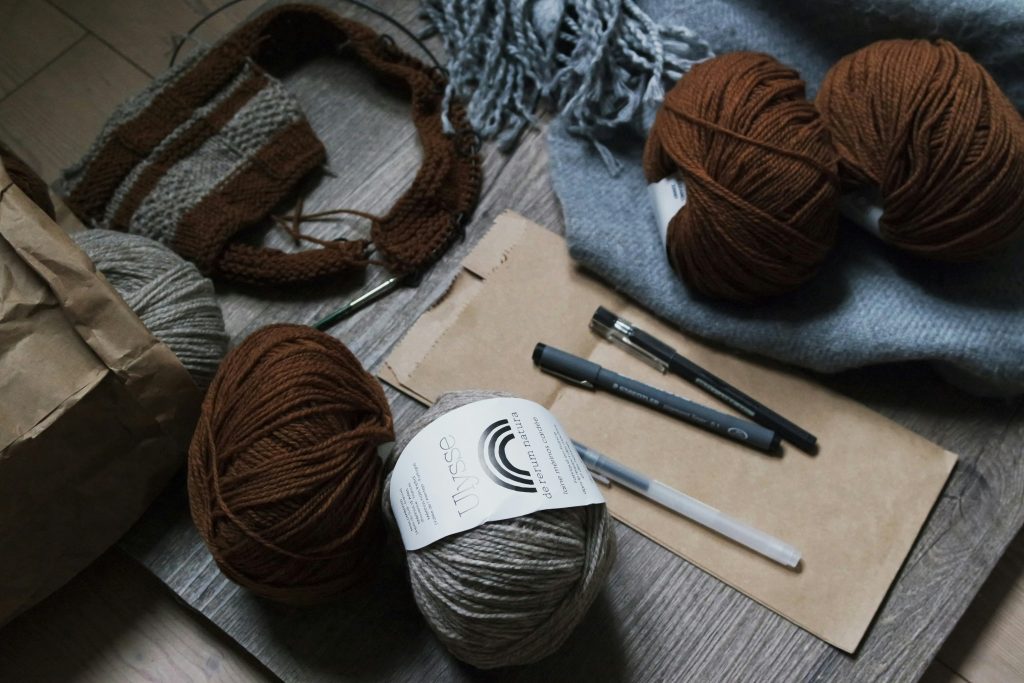
Traveling with a knitting project shouldn’t mean leaving your hobby at home — but a little planning goes a long way, especially if you’re flying. Here’s how to pack smart, so your project survives the trip in one piece (and so do you).
Can You Bring Knitting Needles on a Plane?
Generally, yes — most aviation authorities, including the TSA in the US, allow knitting needles in both carry-on and checked luggage. That said, rules can vary by country and even by individual security officer discretion on the day. A few practical tips:
- Circular needles are usually a safer bet than long straight needles — less likely to raise an eyebrow at security, and more compact in your bag anyway
- Avoid metal cable needles or anything resembling a blade (like some cable needles with sharp points) if you’re worried about a stricter checkpoint
- Bamboo or plastic needles tend to cause the least friction with security — literally and figuratively
- When in doubt, check the specific rules for your departure country before you fly, since interpretations differ
What About Flying in Europe?
If you’re departing from a European airport, don’t assume US-style TSA rules apply — Europe is more inconsistent than you’d expect. The general EU rule bans sharp objects that could be used as a weapon from the cabin, but knitting needles sit in a grey area that isn’t explicitly addressed EU-wide. In practice:
- It varies by airport, not just by country. Brussels Airport, for example, is known for interpreting the rules strictly and turning needles away, even though most other EU airports wave them through.
- It varies by airline, too. British Airways explicitly allows knitting needles and crochet hooks. Eurowings explicitly does not. When in doubt, check your specific airline’s restricted items list before you pack, not just the country’s general aviation authority.
- Bamboo and wooden needles are your safest bet across Europe — they cause noticeably less friction at security than metal ones, and several seasoned traveling knitters specifically switch to bamboo sets for exactly this reason.
- Scissors follow a stricter, clearer rule in the UK/EU: blades under 6cm from the fulcrum are generally fine in carry-on; anything longer needs to go in checked luggage.
Bottom line: bamboo needles plus a quick check of your specific airline’s website is the safest combination for European travel. If you’re island-hopping or connecting through multiple countries on one trip, check the rules for every airport you’ll pass through security at — not just your first departure.
What to Pack in Your Travel Knitting Kit
The essentials:
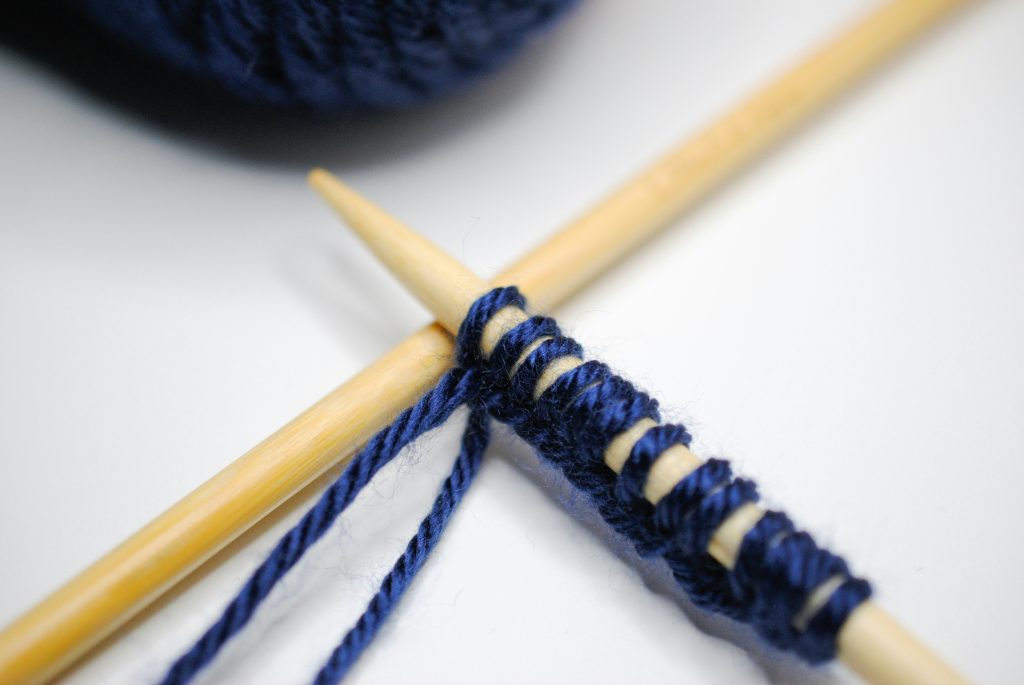
- Your project, already cast on (don’t waste travel time casting on — start before you leave)
- A small pair of scissors or, safer for security, a yarn cutter pendant or thread snips (less likely to be questioned than actual scissors)
- A stitch marker or two, in a small zip pouch so they don’t roll away
- A printed or downloaded copy of your pattern — don’t rely on spotty airport wifi to pull it up mid-flight
- A small notebook or app to track your row count, especially useful on long flights where you’ll doze off mid-row
Nice to have:
- A project bag with a drawstring top — keeps everything contained if your bag tips over in transit
- A spare set of needle tips, in case one snaps (rare, but it happens, especially with wooden needles in checked luggage)
Packing Smart for the Trip
Keep your active project in your carry-on — checked luggage gets tossed around, and delicate lace work doesn’t love that. Save bulkier projects (like a blanket square) for checked bags if you must bring them at all.
If you’re planning to buy yarn along the way — and let’s be honest, you probably are — pack a spare, empty project bag or packable tote just for the haul home. Trying to cram new skeins into an already-full suitcase at 6am before a flight is a very specific kind of stress, and one entirely avoidable with five minutes of planning now.
A Word on Buying Yarn Where You’re Headed
Half the fun of traveling with a project is the excuse it gives you to seek out yarn shops wherever you land — small, independent stores you’d never find scrolling online. Local wool, regional dye traditions, a skein that smells faintly of the shop it came from — these are souvenirs no airport gift shop can compete with. Just don’t be surprised if your “quick stop” turns into forty-five minutes and a full tote bag. It happens to the best of us.
(Coming soon: how to actually get all that new yarn home — packing tricks, weight limits, and what to do when your suitcase says no but your heart says yes.)
Leave a Reply