
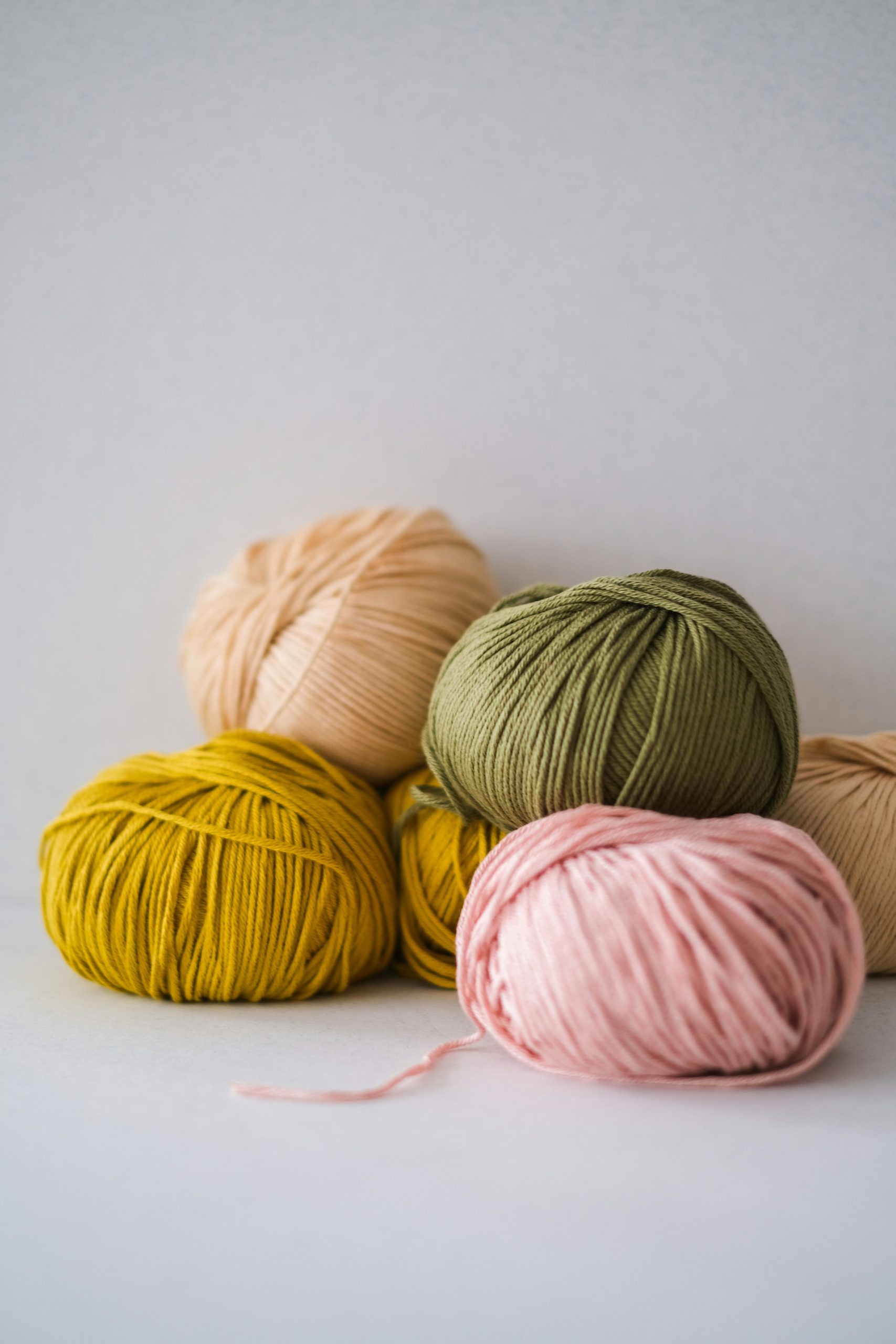
If you want to keep knitting through the heat, plant and protein fibers — cotton, linen, silk, hemp — breathe far better than wool. Here’s a practical guide to each: which brands to look for, what needle size to reach for, how they behave when you swatch, and how to actually wash the finished piece
Cotton
Needle size: US 3–9 (3.25–5.5mm), depending on weight — most cotton yarns for summer garments sit in the sport-to-worsted range.
Swatch behavior: Cotton has almost no give. When you swatch, don’t stretch it while measuring — cotton won’t spring back the way wool does, so an optimistic swatch will leave you with a too-large finished piece. Knit your swatch, let it hang overnight before measuring, since cotton relaxes and can grow slightly under its own weight.
Brands to look for:
- We Are Knitters “The Cotton” — 100% Pima cotton, popular for garment knitting with a soft, consistent hand.
- Plymouth Yarn Fantasy Naturale — 100% mercerized cotton with a silky shine, known for durability and bold color saturation.
- Look for yarns specifically noting Pima (Peru) or Mako (Israel) cotton on the label — these are considered premium long-staple cottons, giving smoother, less pill-prone yarn than standard cotton.
Care: Most 100% cotton yarns are machine washable on a gentle/cold cycle, but always check the ball band — mercerized cotton generally holds up well to machine washing, while some specialty or hand-dyed cottons recommend hand washing to protect color. Lay flat to dry regardless; cotton is heavy when wet and will stretch out of shape if hung.
Linen
Needle size: US 2–7 (2.75–4.5mm) for most linen yarns — often sport to DK weight.
Swatch behavior: Linen straight off the skein is stiff and feels almost papery — don’t judge the fabric by your first swatch. Wash and block your swatch before measuring gauge, since linen changes dramatically with its first wash, softening and drooping into its true drape. Like cotton, it has very little stretch, so pure linen isn’t ideal for ribbed cuffs or anything that needs to snap back into shape.
Brands to look for:
- EcoStitch Flaxi — 100% linen, certified European flax, sport weight (works up to DK).
- DMC Natura Linen — a linen-viscose-cotton blend, softer to work with than pure linen while keeping the characteristic drape.
- BC Garn Allino — a 50/50 linen-cotton blend, a good middle ground if you want linen’s coolness with more elasticity for wearable knits.
- King Cole Linendale DK — a linen-viscose-cotton blend at an accessible price point.
Care: Linen is famously durable and actually gets better with washing — hand wash or gentle machine cycle in cool water, then lay flat to dry. Every wash softens the fabric further, so don’t be discouraged by the stiffness of a brand-new project; it improves with age and wear, unlike most other fibers.
Silk
Needle size: US 1–5 (2.25–3.75mm) for pure silk yarns, which mostly come in lace to fingering weight.
Swatch behavior: Silk has beautiful drape but very little elasticity — swatch generously and let it hang before measuring, since silk fabric will grow and drape downward over time under its own weight, especially in larger pieces like shawls.
Brands to look for:
- Habu Textiles — a Japanese yarn house specializing in pure silk yarns (100% silk), including tweed-spun and flat silk ribbon styles, generally lace to fingering weight.
- Pure silk is relatively rare and sits at the premium end of the price range — for a more accessible option, look for cotton-silk or linen-silk blends, which bring some of silk’s sheen and drape at a lower price point and with a bit more elasticity.
Care: Hand wash only, in cool water with a gentle, pH-neutral wool/silk wash — never wring, press water out gently between towels instead. Silk can weaken when wet, so handle finished pieces carefully until fully dry, and always dry flat, away from direct sunlight, which can yellow the fiber over time.
Hemp
Needle size: US 3–7 (3.25–4.5mm), typically sport to DK weight.
Swatch behavior: Similar to linen — stiff and rope-like fresh off the skein, softening significantly with washing and handling. Several knitters describe it as “fussy to start” but very rewarding once broken in. Swatch, wash, then measure, exactly as with linen.
Brands to look for:
- Lanaknits Allhemp (including Allhemp6) — one of the most established hemp yarn lines, available in multiple weights, known for durability and softening beautifully with wear and washing.
Care: Hemp is exceptionally durable and machine washable in most cases (check the ball band), making it a good choice for pieces that need to last — bags, home goods, garments you want to hand down rather than replace each season.
Quick Reference
| Fiber | Needle Size (US) | Elasticity | Best Swatch Practice | Washing |
|---|---|---|---|---|
| Cotton | 3–9 | Very low | Measure unstretched, let hang overnight | Machine wash cold, lay flat to dry |
| Linen | 2–7 | Very low | Wash & block swatch before measuring | Hand/gentle wash, softens with each wash |
| Silk | 1–5 | Low | Let hang before measuring | Hand wash only, dry flat, avoid sun |
| Hemp | 3–7 | Very low | Wash & block swatch before measuring | Usually machine washable, check label |
A Practical Note
None of these fibers have wool’s natural elasticity, which is exactly what makes them so breathable — but it also means gauge swatches lie more easily. Always wash and block your swatch the same way you plan to wash the finished piece before trusting the measurements, especially for linen, silk, and hemp, which change the most between skein and finished fabric.
***Needle sizes and elasticity notes are general guidance — always defer to the specific yarn’s ball band, which can vary by brand even within the same fiber type.
Leave a Reply