If you learned to knit on a pair of classic straight needles, the wall of circular needles at a yarn shop can feel like a different craft entirely. Here’s what actually separates the two, and how to decide which one belongs in your hands for a given project.
The Basic Difference
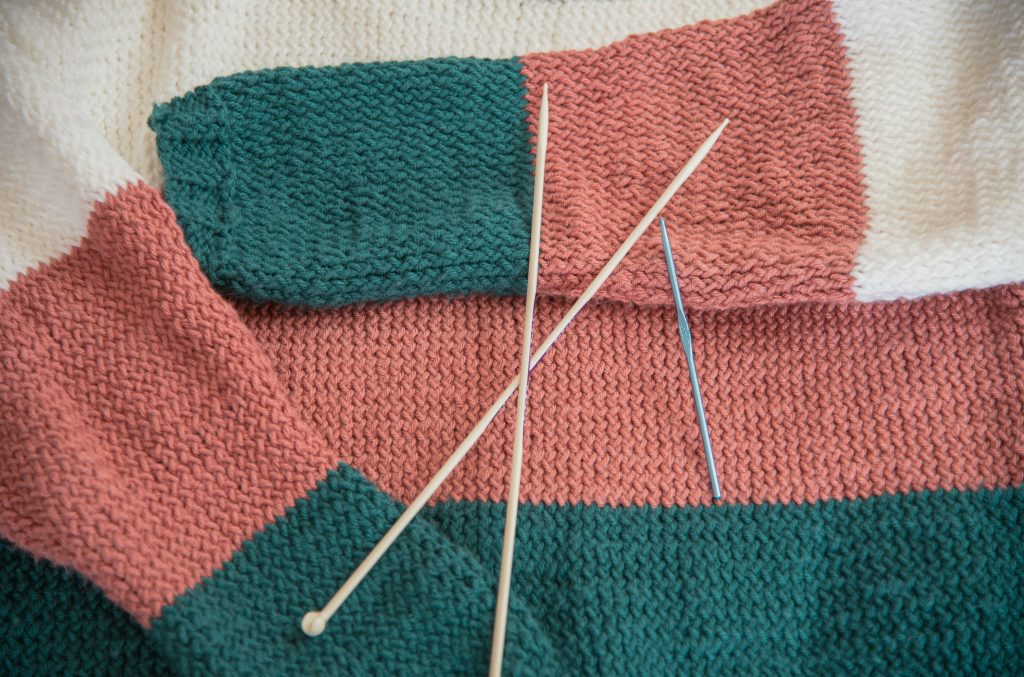
Straight needles are the classic pair — two rigid rods, each with a stopper at one end to keep stitches from sliding off. You knit a row, turn the work, and purl your way back. They only work for flat knitting.
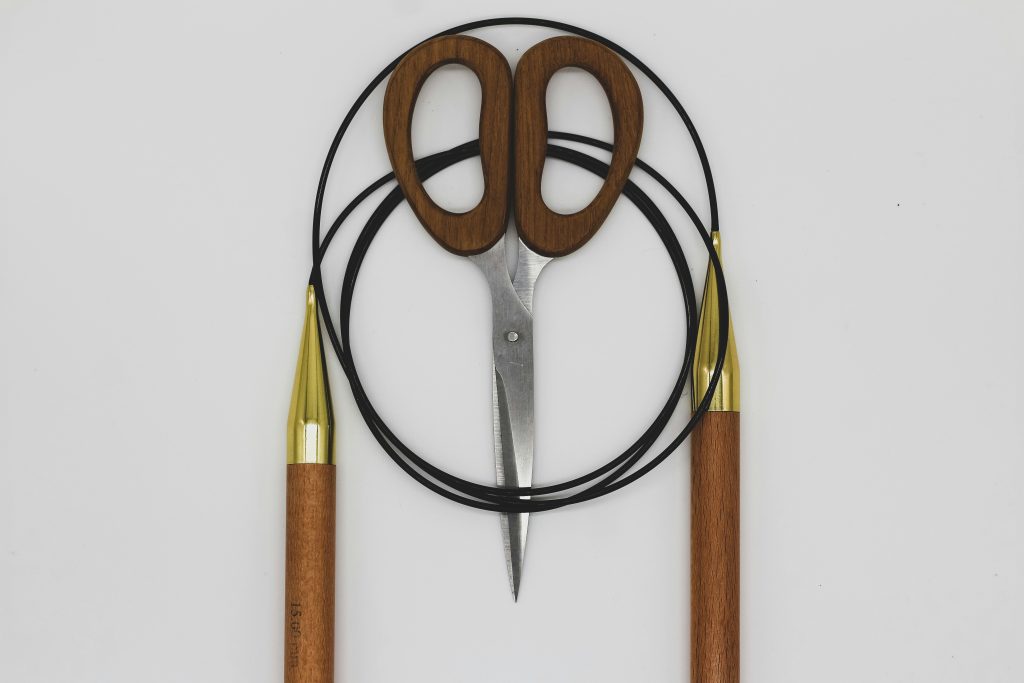
Circular needles are two shorter tips connected by a flexible cable. They can do everything straight needles do — flat knitting, back and forth — but they can also knit “in the round,” producing a seamless tube. This is what makes them essential for things like hats, socks, and top-down sweaters knit without side seams.
Why Circulars Have Taken Over?
Ask around any modern knitting group and you’ll notice most people are knitting on circulars, even for flat projects that don’t strictly need them. There are a few practical reasons:
Comfort on bigger projects. With straight needles, the entire weight of your growing project hangs off the needle tips, resting on your wrists. With circulars, most of that weight rests in your lap or on the cable, which makes a real difference on anything larger than a scarf — a blanket or a full sweater body is noticeably easier on your hands and shoulders when knit on circulars.
No stitch limit. A straight needle can only hold so many stitches before you run out of needle. Circular needles, with their flexible cable, can comfortably hold far more stitches than the needle length alone would suggest — a standard 40-inch circular can knit something nearly double its own length.
Portability. A pair of straight needles pokes out of a bag at both ends and needs a case or roll to travel safely. Circular needles coil into a small loop, and your work can’t slide off and unravel mid-transit the way it sometimes can on an open straight needle. If you’ve read our guide on packing a travel knitting kit, this is exactly why circulars are the easier travel companion.
One needle, many jobs. Circular needles can do everything straight needles do, but not the other way around — you can knit any flat pattern on circulars, but you can’t knit “in the round” patterns on straights at all.
When Straight Needles Still Make Sense
None of this means straight needles are obsolete. They genuinely have their place:
- Learning to knit. Many people find the motion more intuitive at first — no cable to manage, and it’s easier to see your stitches laid out clearly across the needle while you’re still getting comfortable with tension and technique.
- Small, flat projects. Dishcloths, simple scarves, and swatches don’t need the weight-distribution benefits of a circular — a straight needle does the job just as well, with a bit less to think about.
- Personal preference. Plenty of experienced knitters simply prefer the feel of straights for certain projects, cable or no cable. There’s no wrong answer here — comfort is comfort.
So, Which Should You Choose?
If you’re just starting out, either is a reasonable place to begin — but if you plan to travel with your knitting, work on anything sizeable, or eventually knit hats and socks, a circular needle is the more versatile long-term investment, since it can also be used flat exactly like a straight needle. Many knitters end up owning both and reaching for whichever suits the project, rather than picking one permanently.
Ready to buy your first circular needle and wondering whether to go straight for a full interchangeable set, or start with a simple fixed circular? That’s exactly what we cover next.
Leave a Reply